
Identity Healing with Community through Dialogue
“Remember, no matter what anyone says, you’re Filipino.” — an echoing reminder my mom would tell me growing up.
During the pandemic I stayed with my family for several weeks and my mom got really into cooking meals that she had as a child. She was the youngest of six children and grew up in the Philippines until she was 21. Over the pandemic, her sibling WhatsApp group chat became very active and with the guidance of her siblings, she cooked up a storm of Filipino food alongside stories of her childhood I had never heard before, like recalling people in the street selling Taho, a sweetened silken tofu dessert with sago (or Tapioca pearls).
Growing up we had always eaten classic Filipino dishes like Adobo, Lumpia Shanghai, and Pancit Canton. My favorite phrase and arguably the only phrase I know in Tagalog is “Ang Sarap” — “It’s Delicious!” A sensitive point of shame for me as a mixed Filipino-American, only knowing how to count to ten and words that toddlers know in their native language.
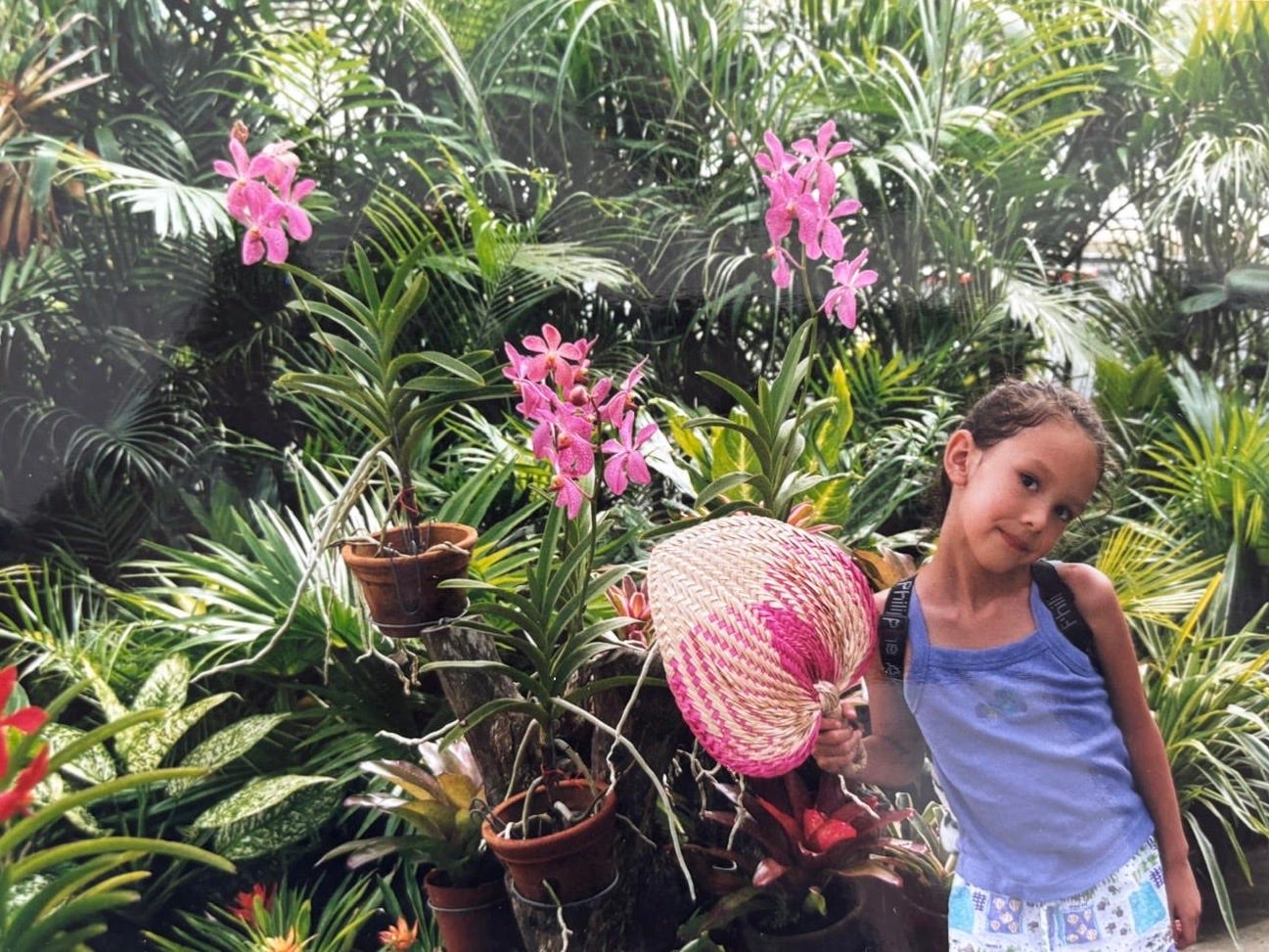
5 Year Old Me in the Philippines
Over the pandemic my mom expanded her home cooking menu by incorporating more dishes that she grew up with, like Arroz Caldo (a type of savory porridge similar to congee), Taho (a sweet street food dessert), and Sans Rival (a meringue, butter cream and cashew dessert), that I have memories of eating on the plane after visiting my mom’s family in California, and Paksiw (a tangy stew dish), which I make every Thanksgiving with leftover holiday turkey, though the recent ban on Filipino food products may make it more challenging.
When I returned to Brooklyn in 2021, I had missed my mom’s homemade cooking immensely. It was warm and homey and in a place where no stranger or outsider could question my Filipino-ness. I actively sought out Filipino food any chance I could, first at a Bad for Business Pop Up by Francis Maling held at the now closed Filipino-owned restaurant, Hunky Dory, in Crown Heights by Claire Sprouse. This pop up was the beginning of me embracing more of where I come from and led to many more menus and moments where I felt connected to my culture in ways I had never before.
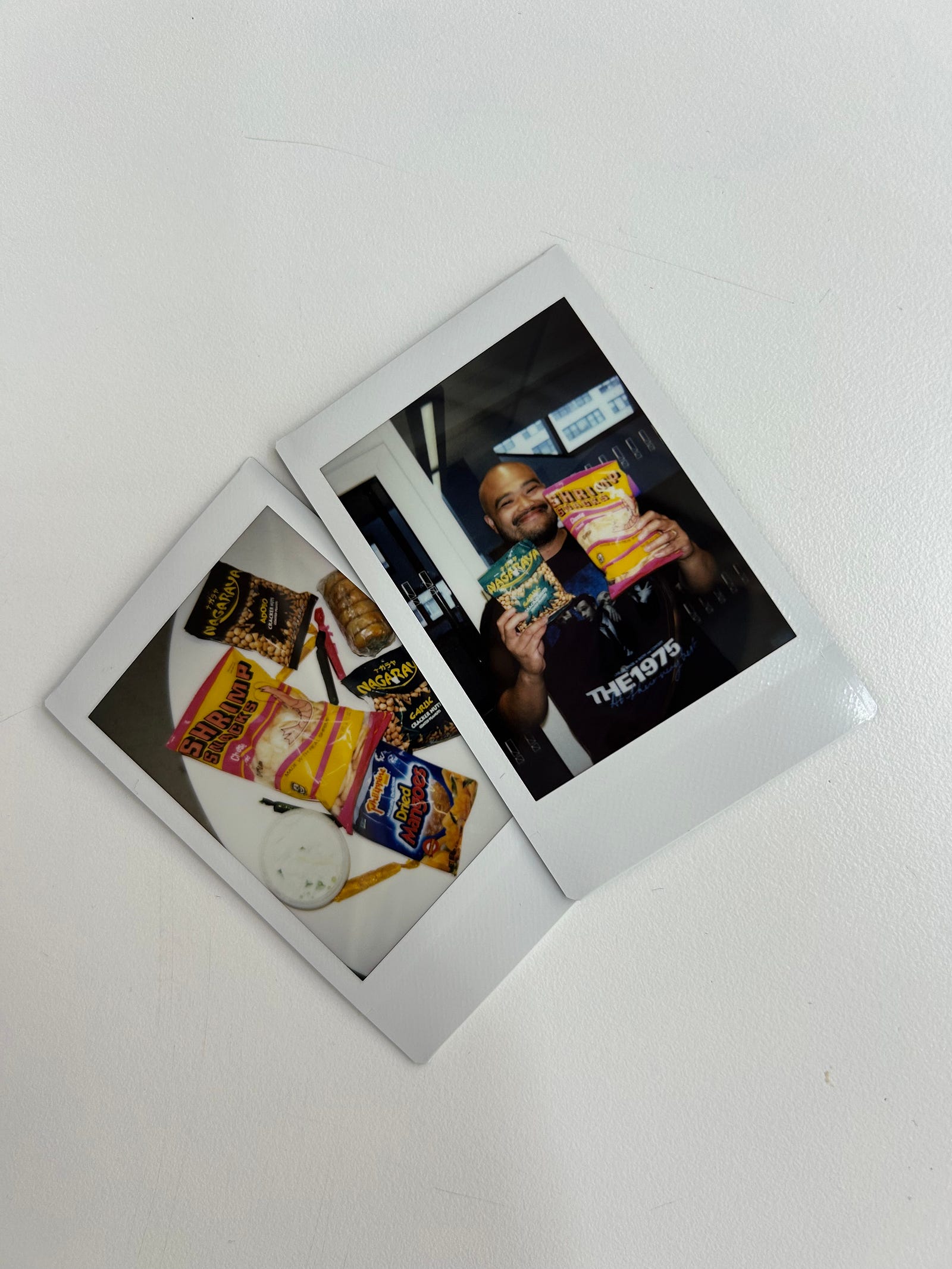
Francis Maling participating in a WWCF dialogue session
While culture is not solely made up of food and eating, food is a conduit for stories to be told about culture and community. From the technical aspects of preparing and cooking the food to the flavor and texture profiles, these elements invite us in and tell us a story that can encapsulate decades and generations worth of connected knowledge and experiences.
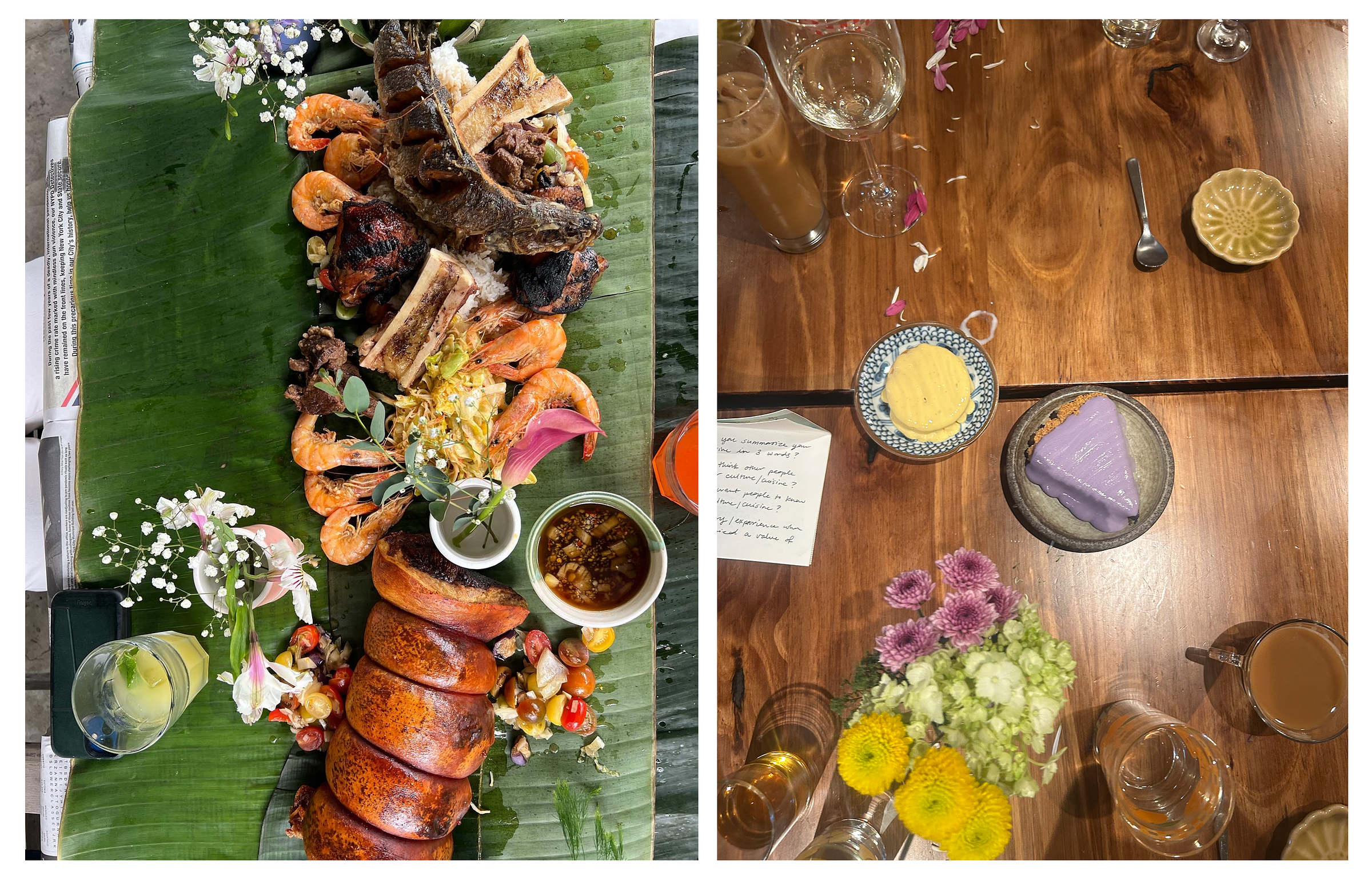
Left: First Birthday Kamayan, May 2022 Right: Most Recent Birthday Kamayan, May 2025
In 2022, I began celebrating my birthday with a Kamayan. The word Kamayan literally translates to “By Hand”. It refers to the Filipino tradition of communal dining where food is shared and eaten with only your hands, on banana leaves, without plates or utensils. It’s become my own tradition where I take time out of the year to not only celebrate my birthday, but also where I come from and share that with my friends.
As I continued to support as many Filipino chefs as I could find hosting events in NYC, I began to feel that I was a part of this thriving yet hidden NYC Filipino food community, that I was being invited into my own culture. With every Filipino restaurant or pop up I attended I would run into someone I had met at the last one. It felt heartwarming to reconnect with parts of who I am on my own terms and in my own way.
The food and service industry has always been a community that values lineage, legacy, connection and support, so what does that mean for a people who are usually behind the scenes, whether front or back of house, but whose food isn’t usually on the table?
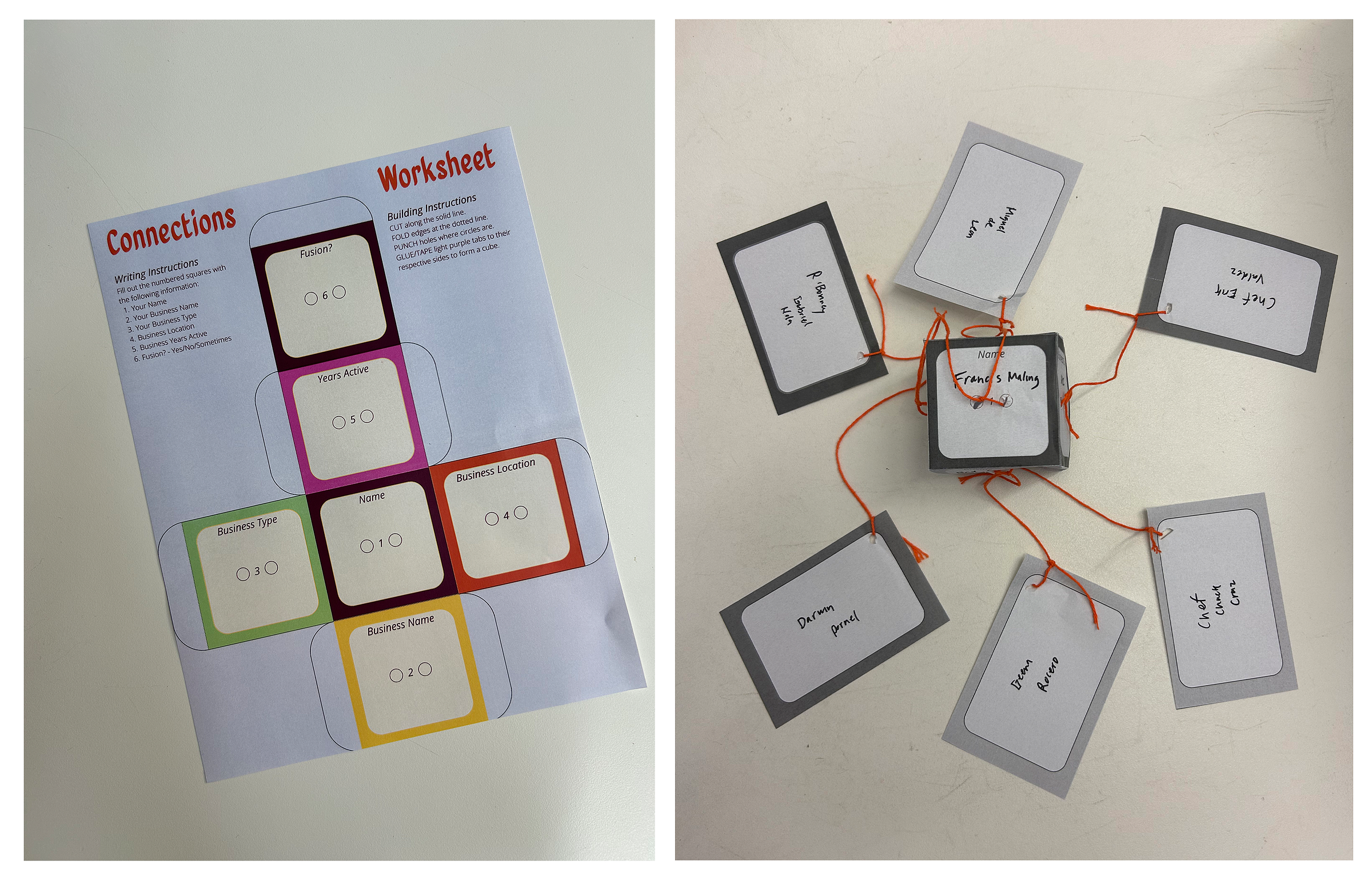
Right: Making Activity, Connections Worksheet Left: Making Activity, completed and built Connections Worksheet by Francis Maling
Where We Come From — A Dialogue Series, aims to bring awareness to the experiences of Filipinos, a people strategically brought over to the United States to work behind the scenes to serve and support American industries — hospitality, medical, childcare, entertainment. First starting with the food industry. To provide a space for collective healing through dialogue and a hands-on making activity that literally connects and builds on community ties.
The Filipino culinary community is vast, a giant web of connections. A thriving community and network not only of Filipino cuisine, but of Filipinos in restaurant kitchens across the five boroughs, mostly cooking everyone else’s cuisines. In comparison to other Asian cuisines we are less visible, less known and less established in the United States with a disproportionately low amount of brick and mortar restaurants. But despite that we have a thriving and supportive pop up scene, a feat that should be not only acknowledged but celebrated.
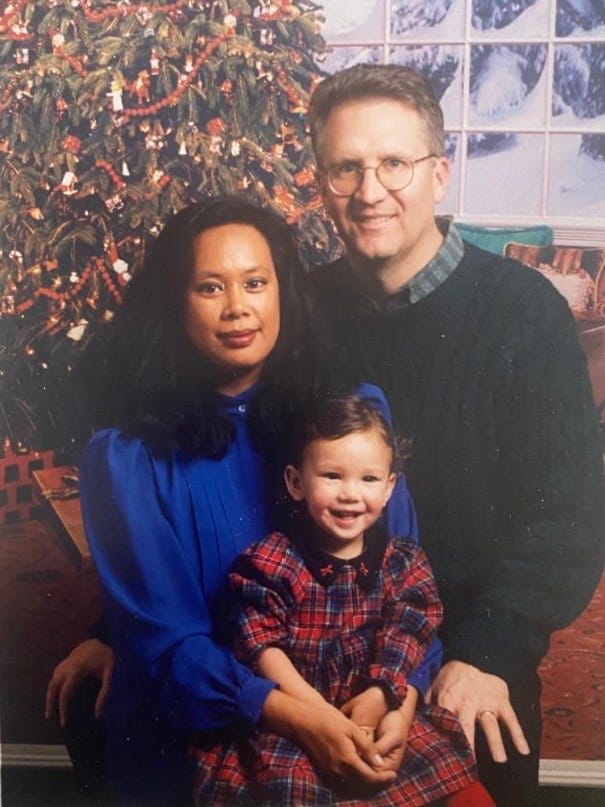
90’s Family Picture
I’ve always identified as mixed. My mom is Filipino and my dad is German-American. And the last several years has been a long journey in understanding what being mixed means to me and how it impacts the way I see the world. For most of my life my identity has remained somewhat separate or removed from the work I do. More recently I’ve come to the realization I can’t leave “half” of who I am behind as I move through the world and so this long term project Where We Come From — A Dialogue Series is my initial effort to bring forth who I am into the work I do, in this case my socially engaged art work.
This endeavor merges my identity and upbringing with myself as “artist” and largely contributes to my own personal healing. That being said, I wanted it to be an experience that also gives back in some way to the community I’m engaging with — to share the space of healing, to heal together by way of being seen and heard, to provide a space for our culture to be shared, appreciated and eventually celebrated with a larger audience.
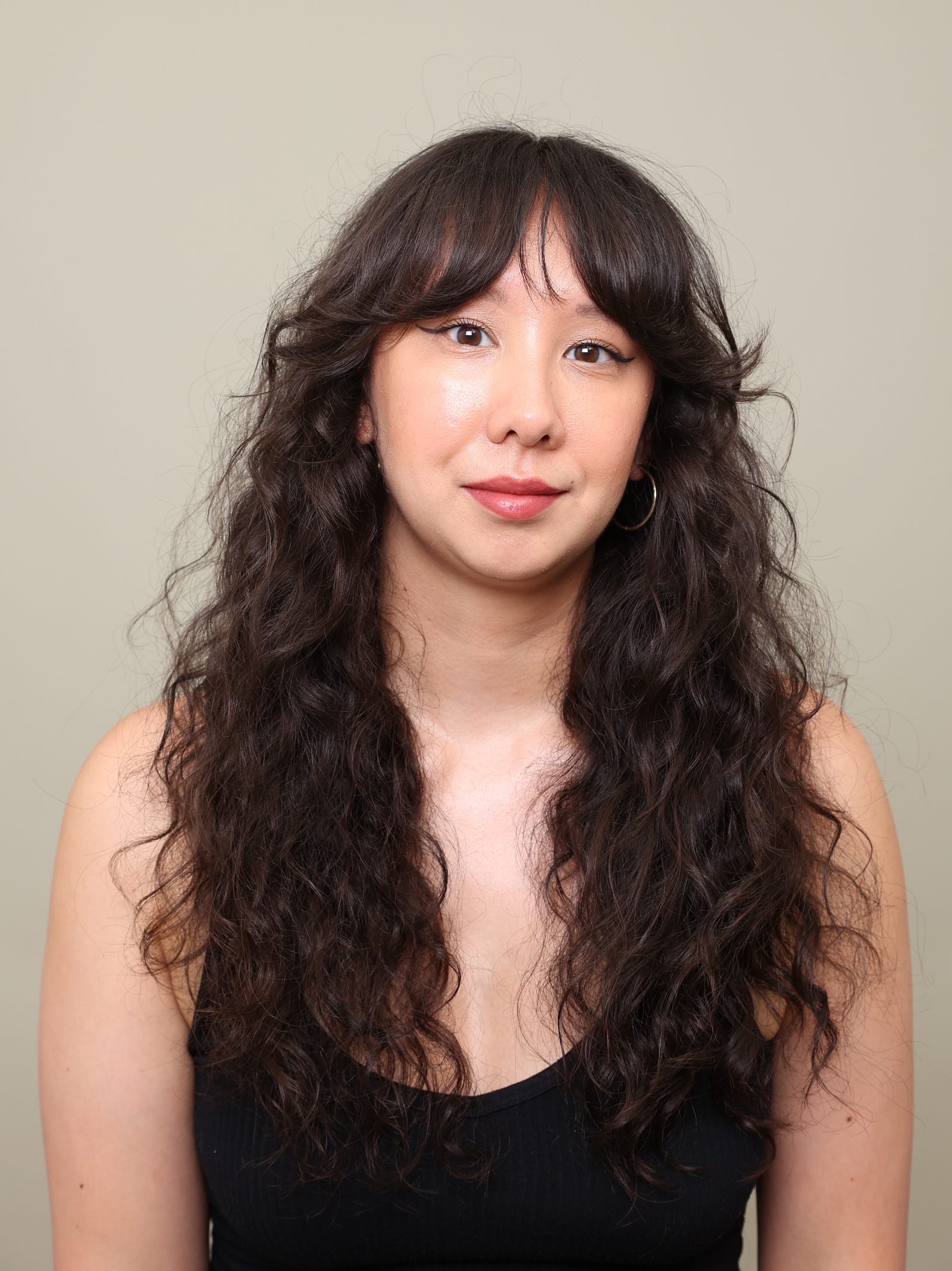
Tatiana Lahera Kalainoff is a multidisciplinary designer, data visualization artist, environmental/3D maker and educator. With experience at the intersection of data + design, she transforms complex information into impactful narratives, using data analytics + visual design. Her work ranges from the physical — print, objects, exhibits; to the digital — experiences, websites, visualizations; and everything in-between. Her work has been exhibited in New York at BRIC House and Allen Street Gallery and will be exhibited this fall at The University of Virginia’s Architecture School.
She believes that equitable access + understanding of information is key to empowering marginalized groups and creating systemic change. With backgrounds in architecture and data viz, she focuses on the intersections of data, design, technology, fabrication, the built environment and storytelling with an emphasis on equitable access to information, demystifying bureaucratic processes, visualizing hidden connections + networks and providing opportunities for underrepresented voices to be heard. Tatiana believes information is power, but it has little to no value without context and a compelling story.
Growing up, Tatiana moved around a bunch and was brought up in a multiracial household (Filipino and German American). Being mixed race and a Third Culture Kid significantly shaped her design perspective and how she engages with the world. She now resides in Brooklyn, NY with her dog Prudence and is currently teaching at Parsons.
This article is also published on More Art’s Medium site.